


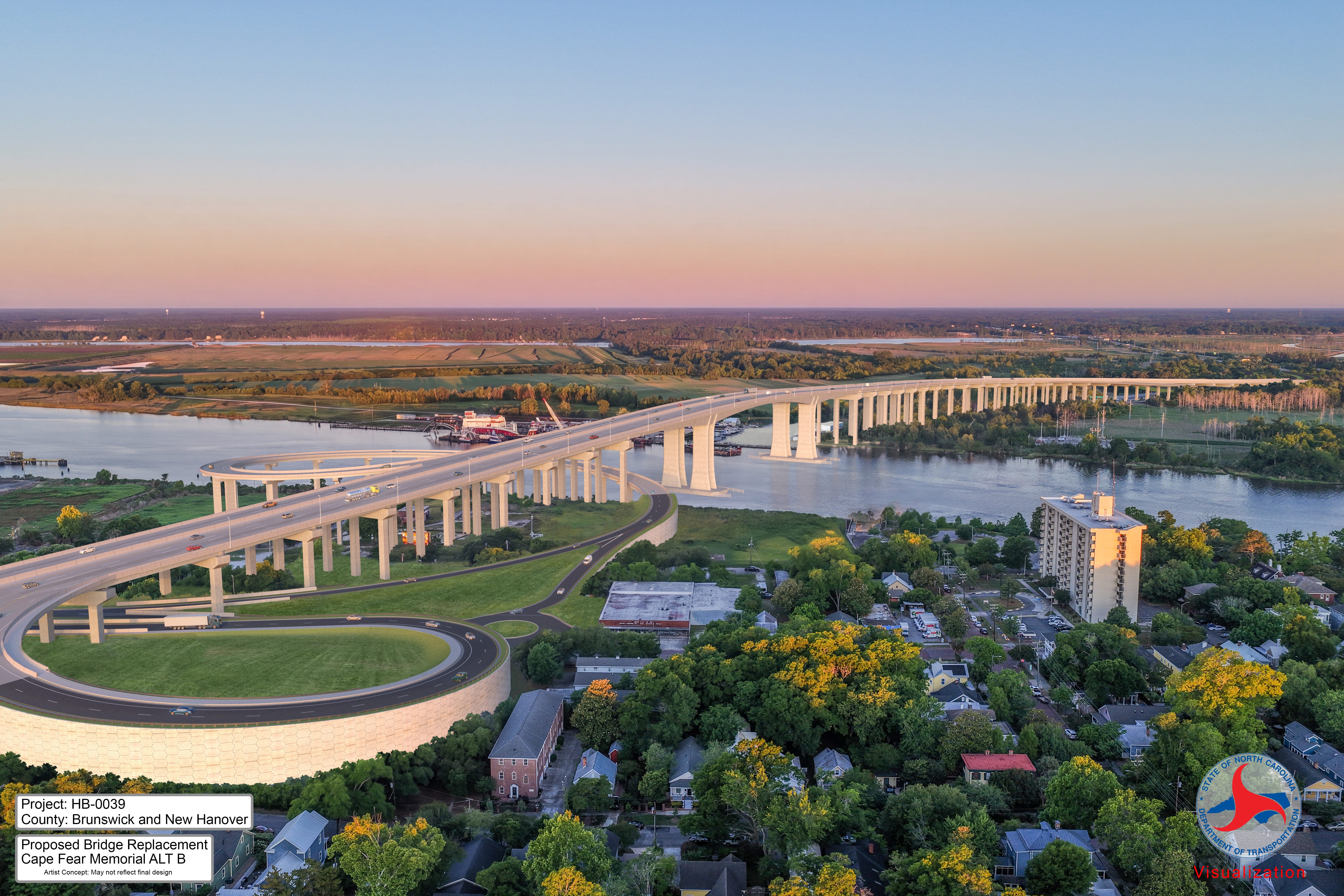
I was pleased to welcome back Mr. Brayton Willis of Leland as our guest. Brayton brings a distinguished 40-plus year career with the U.S. Army Corps of Engineers to the conversation.
With public hearings on the Environmental Assessment for the bridge replacement set for next week (September 15 in Leland), I thought it would be helpful for folks to hear from an expert on the process regarding projects of this magnitude.
In a nutshell, the cost of the replacement bridge hinges largely on the Corps of Engineers’ findings regarding the height of the bridge. After completing its technical review, the Corps reached a clear conclusion.
A replacement bridge providing less than 135 feet of vertical clearance above Mean Higher High Water would negatively affect the usefulness of the federally authorized navigation project.
This video can also be viewed on our YouTube channel.
Detailed Testimony
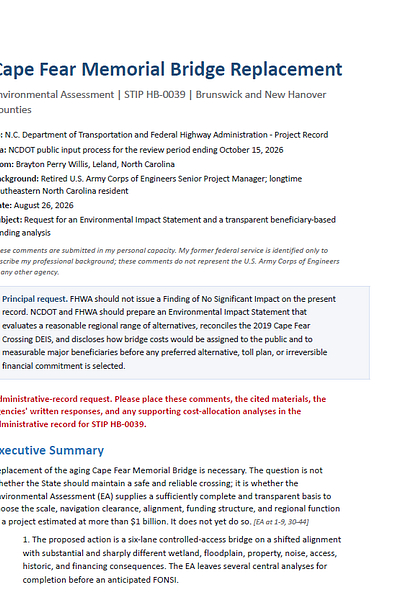
I have attached a copy of Brayton’s detailed testimony that was submitted to the North Carolina Department of Transportation on the Environmental Assessment.
Previous Conversation
Pleased to share the previous conversation we had with Brayton and Leland Council Member Veronica Carter. The Town of Leland has gone on the record opposing the imposition of a toll on the bridge.
The Cape Fear Memorial Bridge: The Missing Piece of the Conversation - Why History, Law, and Engineering Matter

I wanted to share this guest post by Brayton Willis who is a retired Senior Project Manager, U.S. Army Corps of Engineers, regarding this most important subject matter.
Public Hearings Scheduled
Public hearings for the project will be held on September 14 and September 15.
Monday, September 14
Doors Open at 4:30 p.m.
Formal Hearing begins at 6:00 p.m.
Cape Fear Community College (Daniels Hall)
502 N. Front Street
Wilmington, N.C. 28401
Tuesday, September 15
Doors Open at 4:30 p.m.
Formal Hearing begins at 6:00 p.m.
Leland Cultural Arts Center
1212 Magnolia Village Way
Leland, N.C. 28451
About Brayton
Brayton Willis is a retired Senior Project Manager with the U.S. Army Corps of Engineers Civil Works Program. During a career spanning more than four decades, he worked on federal navigation studies, environmental impact statements, water resources planning, and intergovernmental coordination involving federal, state, and local agencies. He is a resident of Leland, North Carolina, and writes in his personal capacity. The views expressed are his own and do not represent the official positions of the U.S. Army Corps of Engineers, the Department of the Army, or any other governmental agency.