


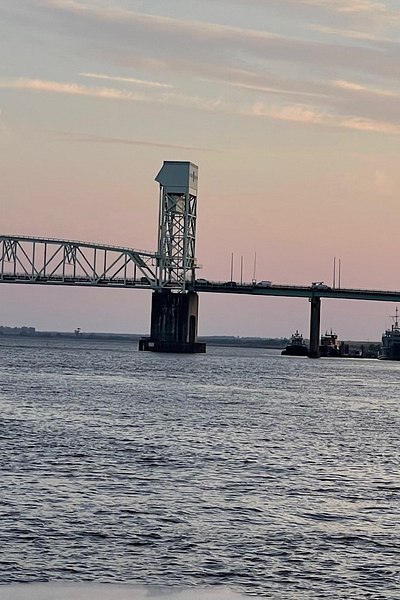
The Cape Fear Memorial Bridge needs to be replaced. On that, nearly everyone agrees. But how we replace it — and who pays for it — deserves a much harder look than it’s getting right now.
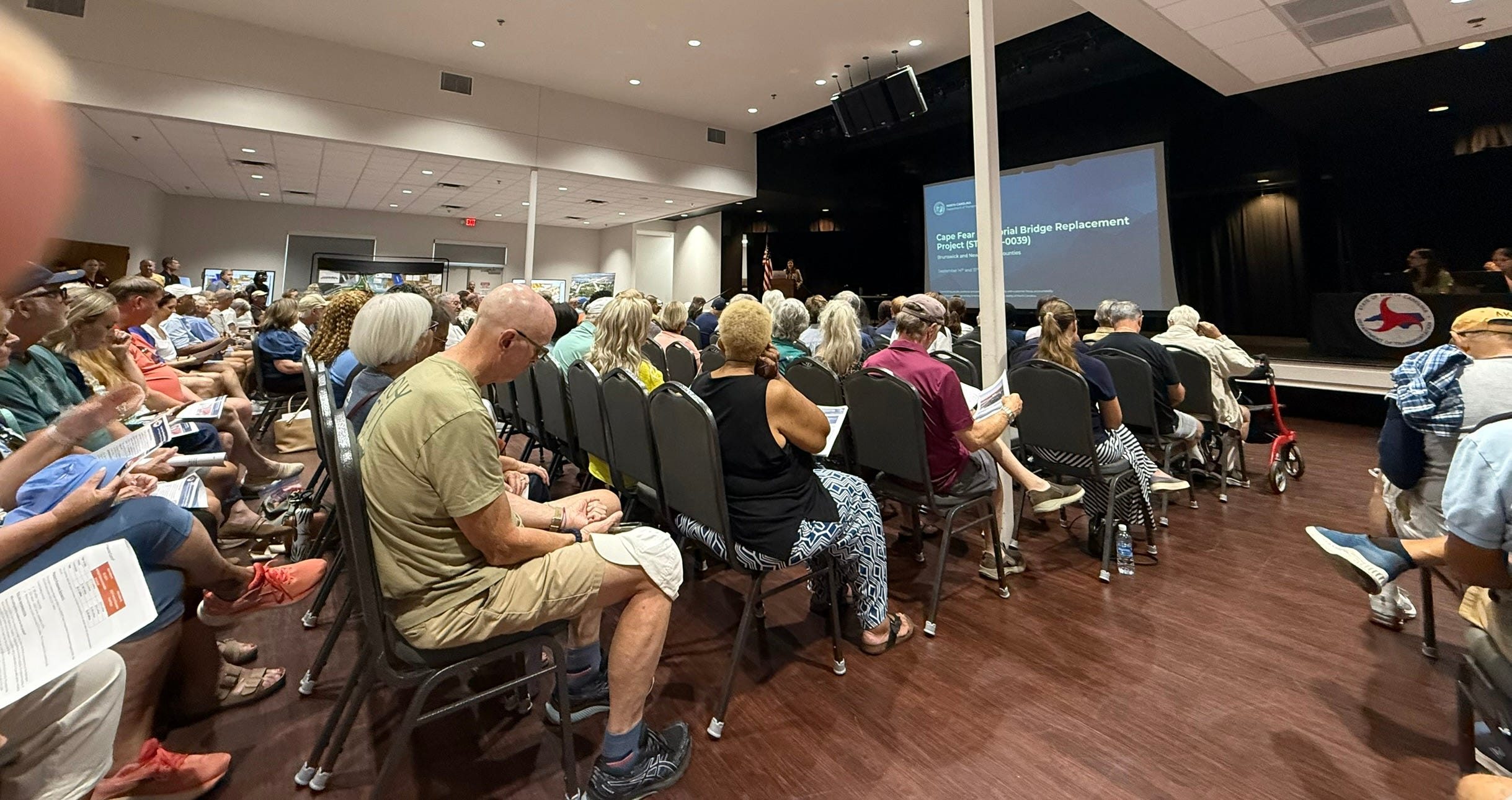
Last evening I presented testimony at the North Carolina Department of Transportation public hearing on the environmental assessment for the bridge replacement project.
Two Options, One Big Problem
The community is currently being asked to weigh in on an Environmental Assessment covering two bridge replacement alternatives. Both come with a price tag north of $1 billion. And both share the same catch: the financial plan behind them depends on tolling drivers to cover construction, operation, and maintenance costs — on a bridge that has always been part of the public road system.
Charging tolls on a road that’s never had them isn’t a minor detail. It’s a fundamental shift in how the public pays for infrastructure it already owns, and it deserves real scrutiny before it becomes the default assumption baked into every option on the table.
Tolls are not an acceptable option. A $2.75 one-way toll will take more than $65 million out of the economy on an annual basis - that’s more than $1.9 billion over a three decade period.
What Happened to the Cheaper Option?
There was a third path: Alternative C, a lower-cost design. It was dropped from consideration early — and the reasoning behind that decision is worth examining.
The justification centers on protecting a federal navigation channel north of the Cape Fear Memorial Bridge, as though it still needs to accommodate large commercial vessels. But before we let that assumption drive a billion-dollar decision, the public deserves real answers about what that channel actually requires, who actually uses it, and what it actually costs to maintain.
The Real Cost of “Keeping Options Open”
Maintaining that navigation channel isn’t free. It’s tied to a dredging project estimated at more than $800 million — and North Carolina hasn’t committed its share of that funding. On top of that:
There’s no clear evidence of economic activity north of the bridge that would justify engineering a bridge around large freight vessels.
Disturbing river sediment in that stretch raises real environmental red flags, including the risk of stirring up PFAS and other contamination.
In other words, we may be designing a taller, more expensive bridge — and asking drivers to pay tolls for it — to protect a navigation need that hasn’t been proven to still exist.
A Reasonable Next Step
Rather than accepting the current assumptions at face value, there’s a clear path forward: ask North Carolina’s Congressional Delegation to direct the U.S. Army Corps of Engineers to conduct a Section 216 review.
Put simply, that review answers one question: Does maintaining a deep federal navigation channel north of the Cape Fear Memorial Bridge still make navigational, economic, and environmental sense?
If the review finds that it doesn’t, this community shouldn’t be locked into a taller, costlier bridge — and a tolling scheme — built to serve a need that may no longer be real.
The Bottom Line
Nobody is arguing against replacing the bridge. The argument is about making sure we replace it the right way — at the right height, for the right reason, without asking the public to shoulder tolls and billions in costs based on outdated assumptions. That starts with getting real answers before locking in a billion-dollar decision.
Lowering Bridge Height Has Been Done Elsewhere
Wilmington Council Member Salette Andrews authored an informative blog post on the fact that just eight months ago in the Pacific Northwest the U.S. Coast Guard reconsidered the required clearance for another major bridge replacement—and reduced it by 62 feet.
We deserve the same reconsideration.
