

The Cape Fear Memorial Bridge has carried US 17/76/421 traffic across the Cape Fear River since 1969. Built to handle far less traffic than the roughly 65,000 vehicles that now cross it daily, the bridge is nearing the end of its usable life. NCDOT is moving forward with a replacement project — estimated at $1.1 billion — and the coming weeks are a critical window for public input before a design and funding path are locked in.
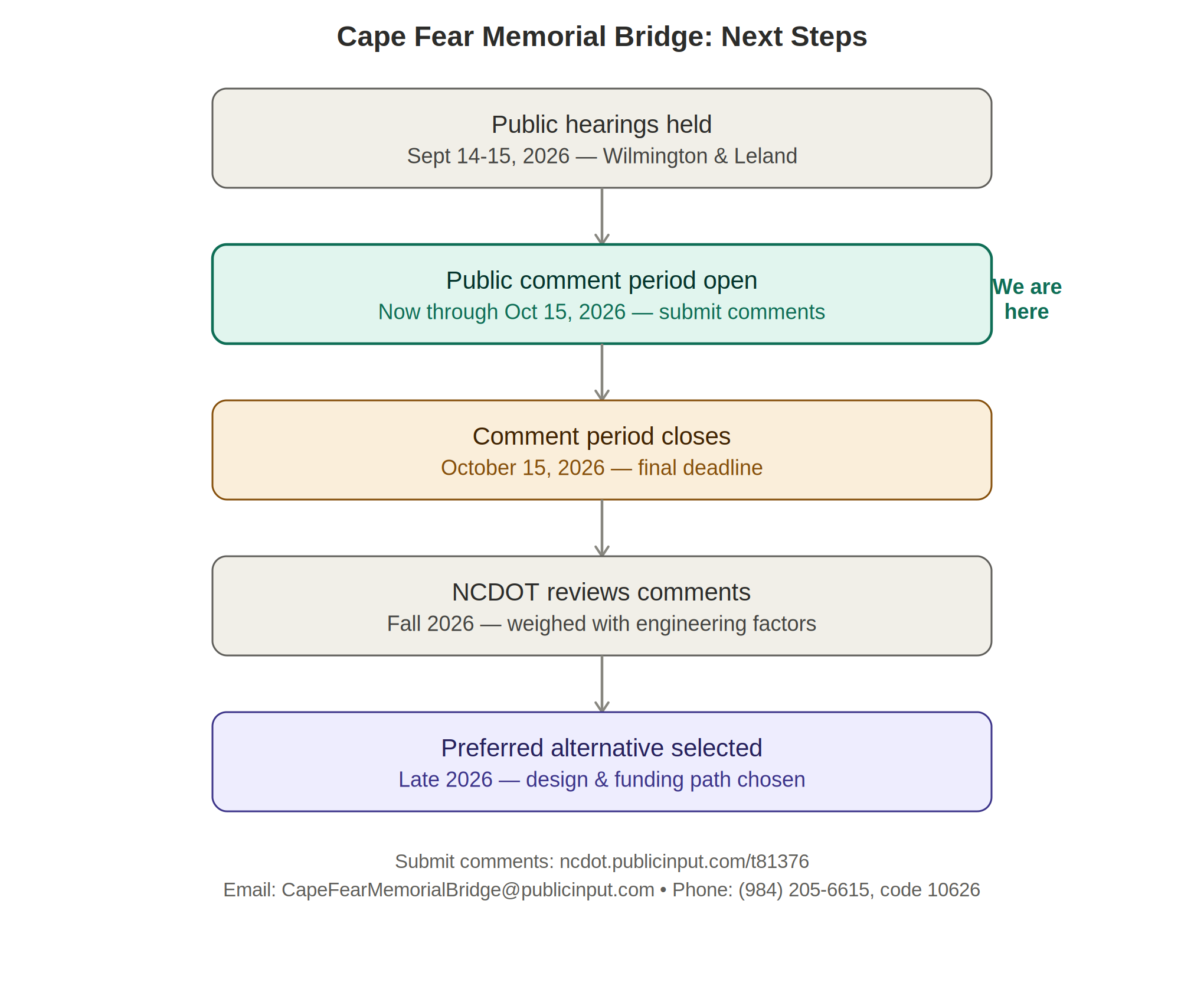
Here’s where the project stands, what’s being decided, and exactly how to weigh in before the October 15 comment deadline.
Where the Project Stands
NCDOT held two in-person public hearings in mid-September 2026 — one in Wilmington at Cape Fear Community College and one in Leland at the Leland Cultural Arts Center — to present two design alternatives and gather public reaction:
Alternative A: A movable (lift) span providing 65 feet of clearance when lowered, rising to 135 feet when raised.
Alternative B: A fixed-span bridge sitting at a constant 135 feet, letting boat traffic pass without a lift.
More than 60 residents spoke at the Wilmington hearing alone, and the reaction was strong: attendees largely rejected Alternative B — nicknamed “Option Bad” by critics — over concerns it would tower over downtown, require removing homes and businesses near Fifth Avenue, and increase construction costs.
Nearly every commenter who spoke also opposed adding a toll to the bridge, though NCDOT has indicated a toll may be difficult to avoid, since the project’s funding score in the state’s Transportation Improvement Program (STIP) process was built around a tolled model.
Here is a synopsis from the North Brunswick News regarding the meeting that was held in Leland.
The Funding Gap Behind the Toll Discussion
The federal government awarded a $242 million grant toward the project in 2024, but that — combined with other state and federal funds — still leaves a substantial shortfall against the $1.1 billion total cost. That gap is why tolling (including a proposed private toll arrangement) is on the table, with figures discussed as high as $2.75 per one-way crossing.
Local governments have already staked out positions on this. Wilmington City Council unanimously passed a resolution opposing bridge tolls in January 2024, and Leland’s Town Council followed with its own resolution in April 2026.
What Happens After October 15
Once the comment period closes:
NCDOT’s project team will review all submitted comments and prepare a public comment summary, posted to the project website.
NCDOT will meet with local government and agency partners to weigh public input alongside engineering, environmental, safety, cost, and benefit analysis.
A preferred alternative — covering both the bridge design and the funding approach — is expected to be selected by late 2026.
NCDOT has stated that comments carry equal weight regardless of how they’re submitted, so an emailed comment counts the same as one given in person at a hearing.
Five Things You Can Do Right Now
Drawing on the action steps outlined by nocfmbtolls.org, here’s how to make sure your voice is part of the record before the window closes:
Submit a formal comment to NCDOT before October 15. This is the single most direct way to influence the outcome. You can:
Submit online through NCDOT’s public input portal
Email comments to CapeFearMemorialBridge@publicinput.com
Call and leave a comment at (984) 205-6615, project code 10626
Find general project updates at NCDOT’s Cape Fear Bridge Replacement page
Contact your state legislators. Let them know your position on tolling and ask what alternative funding sources they’re pursuing. Find your legislators
Reach out to the WMPO board. The Wilmington Metropolitan Planning Organization board is the body that actually votes on whether to accept a tolled funding model. WMPO contact info
Contact your federal representatives. Since federal transportation dollars are part of the funding picture, your U.S. Senators and Representative can be asked to support non-toll funding options. Tell them to support a Section 216 review of the project to re-examine the need for the proposed height of the bridge. Find your member of Congress
Reach out to Governor Josh Stein’s office. As the state’s chief executive, the Governor has visibility and influence over how NCDOT and the STIP process weigh major funding decisions like this one. Let his office know your position on the bridge design and the toll. Contact Governor Stein.
New Hanover County Weighs In
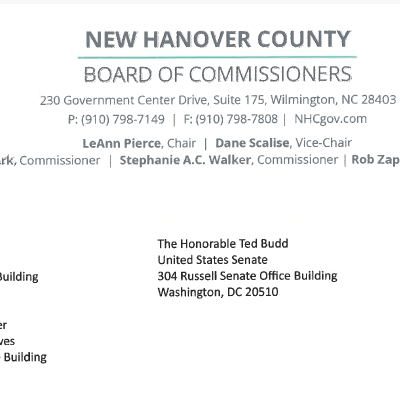
Members of the New Hanover County Board of Commissioners sent a joint letter to our US Senators and Representative Rouzer requesting additional federal funding and a new navigational study of the Cape Fear and Northeast Cape Fear rivers.
The Bottom Line
The design alternative and the funding structure — including whether a toll is part of the final plan — are still open questions. With the public comment period closing October 15, 2026, and a preferred alternative expected by the end of the year, this is the window where public input has the most influence on the outcome. If you have an opinion on the bridge height, the toll, or the project generally, now is the time to put it on the record.
This post summarizes publicly available information from NCDOT and community advocacy resources as of September 2026. For the most current project details, hearing materials, and comment submission options, visit NCDOT’s project page directly.