


Homelessness is often talked about as a problem of housing. Eden Village of Wilmington starts from a different premise: that homelessness, especially the chronic kind, is really a problem of community — and that the solution is dignity, not just shelter.
What Eden Village Is
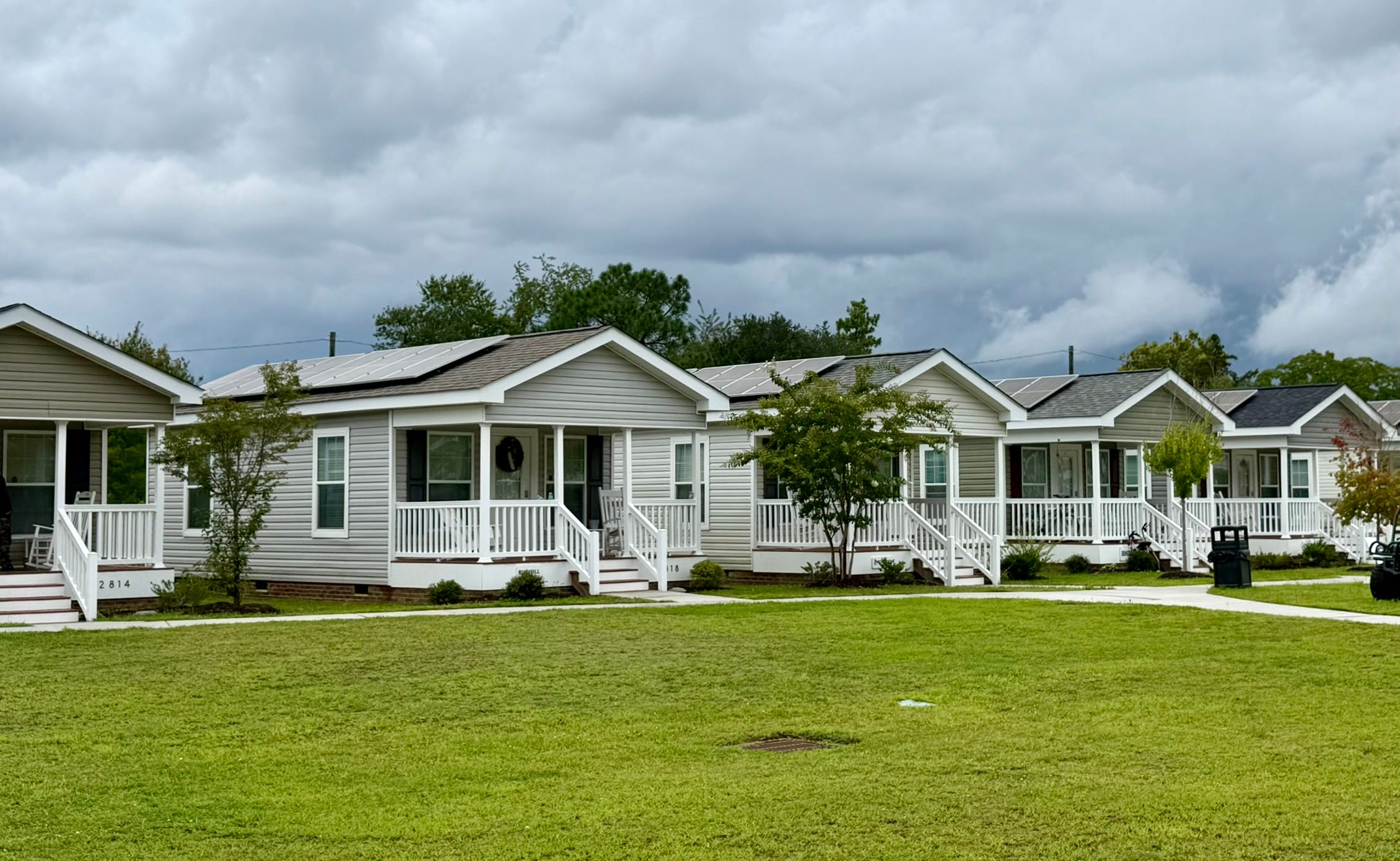
Eden Village of Wilmington is a 31-unit tiny home community built specifically for people experiencing chronic homelessness in New Hanover County. Many residents are also patients at the local medical center, living with chronic illnesses that are treatable in theory but nearly impossible to manage without a stable place to live. A consistent home turns out to be one of the most effective forms of healthcare a person can receive.
The community sits next to the Wilmington airport, adjacent to a Salvation Army complex, which puts residents close to support services, transportation, and job training resources they may need as they rebuild their lives.
The model isn’t original to Wilmington — it’s based on Eden Village of Springfield, Missouri, a proven approach the Wilmington team partnered with rather than reinventing from scratch.
I was pleased to interview Dr. Tom Dalton the Founder of Eden Village about the founding of this effort in 2020, how it has grown and future plans.
You can also view this video on our YouTube channel.
What Life There Looks Like
This isn’t a shelter or a transitional program. It’s designed to be permanent, dignified housing:
Fingerprint-controlled, gated, pedestrian-only courtyard setting, so residents live somewhere safe and quiet
Fully furnished, handicap-accessible tiny homes, each with its own front porch
A one-acre community garden residents can tend
A community center/clubhouse with offices for support services, space for workshops and group dining, private space to meet with counselors, and access to computers
A Community Market, where residents can earn points by serving their neighbors — points that convert into benefits and currency they can spend at the market
A “home team” of volunteers that meets with each resident monthly, providing an ongoing relationship rather than a one-time hand-off
Residents pay $300 a month to live there. Most have some income of their own — commonly around $750 a month from government sources — since having some income is a requirement to move in. The goal is affordability paired with real accountability, not a free handout.
Built to Be Sustainable, Too
Dignity isn’t the only thing baked into the design — sustainability is a core part of the model. Eden Village’s 400-square-foot tiny homes were designed to be energy efficient, and the community has been steadily building out a solar power system meant to eventually cover the community center, a gazebo structure, and every tiny home on-site. The Wilmington homes were built as solar-powered from the outset, and outside grants have continued to fund solar installations across the remaining homes in the gated community.
The payoff isn’t just environmental.
Lower utility bills also mean more of the community’s limited budget can go toward services and programming instead of power costs — and the savings help keep rents affordable for residents. It’s a good match for the tiny-home model generally: a smaller footprint means lower construction costs and lower ongoing energy use, which benefits residents’ wallets as much as the environment.
The Numbers Behind the Mission
Local advocates who track chronic homelessness through shelters, hospitals, and police departments estimate there are roughly 100 disabled, chronically homeless single adults across the area Eden Village serves. That’s a strikingly solvable number — not an abstract, unsolvable crisis, but a defined group of neighbors who could realistically all be housed.
Eden Village’s long-term vision is to build additional communities of similar size to house more of them, with the timeline depending entirely on funding.
The Philosophy
The organization sums up its approach simply: the solution to poverty is dignity, and the solution to homelessness is a home and a community. That shows up in small design choices throughout Eden Village — furnished homes instead of bare rooms, front porches instead of anonymous doors, a market where residents earn their place instead of just receiving aid, and a home team that shows up every month instead of disappearing after intake.
How to Get Involved
Eden Village of Wilmington is a 501(c)(3) nonprofit, and it relies on the community to keep running and to grow:
Volunteer by joining a Home Team or supporting the community in other ways
Donate — financially, through the endowment, by sponsoring a home, or by giving items from their current needs list
Take a tour — staff offer guided tours on Mondays at 2 p.m., meeting at the community center
Apply — if you or someone you know is disabled and has experienced homelessness for more than a year, Eden Village has an application process
For more information, visit edenvillagewilmington.org or reach out at 910-200-7571.
You can read the full history of Eden Village by clicking on the button.
Pleased to share this video from Eden Village.